Introduction
The EU High Speed Rail Plan, published by the European Commission in November 2025, returned to the spotlight at InnoTrans 2026. Alongside it came renewed attention on the persistent backlog in deploying the European Rail Traffic Management System (ERTMS). The Trans-European Transport Network (TEN-T) aims to connect all EU capitals and major cities by 2040, which presents a significant challenge for infrastructure managers and contractors.
The TEN-T Regulation requires ERTMS across the core network by 2030, and on the rest of the TEN-T network by 2050. Deployment is nowhere near that line. By the end of 2024, ERTMS trackside signalling (ETCS) covered around 10% of the TEN-T network, some 12,400 km, with 17% of the core network equipped. The Third ERTMS Work Plan, published in February 2026, concludes that based on current planning only about half of the 2030 core network target is likely to be achieved.
With planning is already well underway for next year, contractors face a familiar challenge: how to deliver more work within the same limited number of track possession windows and overnight access periods.
An uphill struggle for rail infrastructure contractors
The European Commission estimates that completing the planned high-speed network within TEN-T will require €345 billion of investment by 2040. Money is only part of the problem. Even where the funding is in place, there are other factors that make it challenging for infrastructure managers to meet their 2040 deadline.
One of these is a shrinking workforce, which can be seen across multiple countries. In the Netherlands and the UK, for example, one third of rail workers are expected to retire this decade.
Similarly, in Germany, 38% of the workforce is older than 50 years. UNIFE has made its concerns about this trend quite clear, highlighting a lack of skills for all rail works across Europe.
Another confounding factor is the EU ambition for increased rail traffic in the coming years. The number of freight trains is expected to double and passenger trains to triple, placing a higher maintenance burden on a diminishing rail workforce.
There is only one way out of this predicament, and that is a significant increase in productivity. The workforce is not going to grow, so the way forward is digitalisation.
Where time goes during a possession
The common assumption is that working time disappears into the rail works themselves. A large share of it is consumed before the work starts, by putting the safety measures in place. Those measures still rely on manual methods, and that is where the hours go.
In a typical maintenance shift in the Netherlands, setting up safety measures can take 25% of the total work time. On a four-hour shift, that is a full hour, and across a year and multiple maintenance regions it adds up quickly. Reclaiming this lost time is a clear path towards getting more done with the same, or fewer, resources.
Extra nights reduce rail capacity and increase the cost by at least €25,000 for each additional night of work. It is also when worksite protection is under time pressure that mistakes can happen, putting the entire team at risk while they place flags, detonators and short-circuiting devices.
Reclaiming time on every possession
Clearing the ERTMS bottleneck will rely on European rail contractors modernising and digitalising railways while also keeping them open to an increasing amount of traffic.
Productivity per possession increases when safety measures consume less time and when contractors use remote possession protection. When Network Rail used a mobile maintenance train within a single protection zone in Sussex, they gained an additional six hours of maintenance work over the course of four-night shifts. Extended across a full year, that amounts to savings of £425,000.
The real impact of digital and remote safety technologies
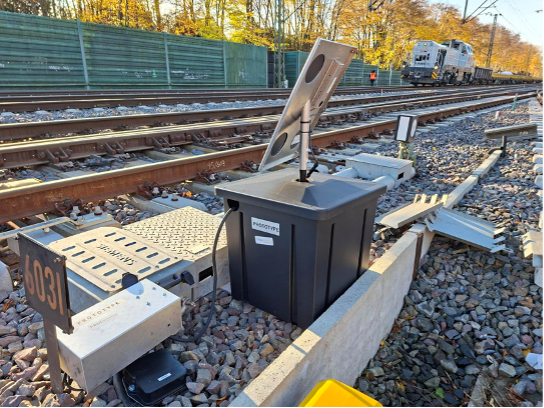
While rail contractors remain cautious about digitalisation, we see a growing interest in an expanded range of remote-control use cases. In Germany, for example, we have been supporting the remote operation of point machines when they become disconnected from the power supply, and there is growing interest in earthing the overhead line and securing level crossings remotely.
Network Rail currently carries out 8% of possessions under T3-A or T3-D, which allows 6% more work to be completed, and they plan to increase this to 80% by 2029. When remotely operated equipment or signal disconnection is used, the risk carried by a possession drops by around two thirds. Network Rail measures this with the Fatality Weighted Index, which falls from 0.898 under traditional protection to 0.306 where engineering controls are used.
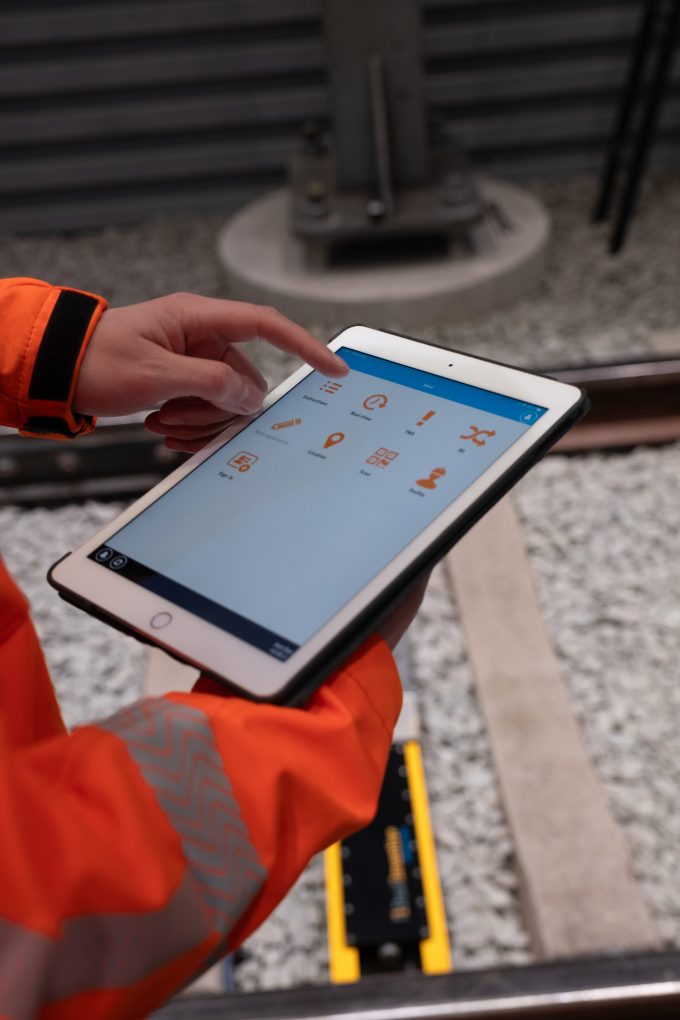
The gain grows when these use cases stop being separate projects. Taking the track out of service, demarcating the worksite and earthing the overhead line can all be done remotely, from a point of safety, at the press of a button. Combined, these use cases mean a team can be working within five minutes of the last train passing.
Safety and productivity do not have to be at odds with one another. Our experience is that they move in the same direction. With greater digitalisation, work can start sooner, with fewer people on the track, and with increased safety.
Moving forward at increased speed
European rail infrastructure contractors have considerable work ahead of them, and this work must be completed under the pressure of increased traffic capacity and a smaller workforce.
Remotely operated protection and increased digitalisation can win back lost time and help improve the safety of workers. The cost savings may not be the primary incentive for infrastructure managers, but they do indicate the ability to achieve the same amount of work in less time and with fewer people on site.
These technologies allow infrastructure managers to increase productivity, efficiency and safety at the same time. The direction is settled. What remains open is the pace.
It is not always clear to infrastructure managers exactly how much time is being lost on each possession, or where time can be reclaimed. If you would like a personalised calculation for your organisation, get in touch.
Source
Europese Commissie, hogesnelheidsplan
https://eur-lex.europa.eu/legal-content/EN/TXT/?uri=celex:52025DC0903
https://transport.ec.europa.eu/document/download/774e79c9-1ece-4514-8f16-a2b98049c82e_en
https://transport.ec.europa.eu/news-events/news/commission-launches-plan-accelerate-high-speed-rail-across-europe-2025-11-05_en
ERTMS-uitrol
https://transport.ec.europa.eu/news-events/news/third-ertms-work-plan-ertms-deployment-progressing-more-must-be-done-2026-02-23_en
https://www.railwaypro.com/wp/ertms-deployment-in-eu-member-states-remains-very-slow/
https://railwaypro.com/wp/the-european-commissioner-for-transport-opens-innotrans-2026
https://www.railjournal.com/analysis/struggling-to-join-the-dots-on-the-etcs-route-map/
Network Rail, T3-A and T3-D
https://railway-news.com/download/use-case-t3-a-dual-inventive/
https://railway-news.com/download/unlocking-safer-more-predictive-and-cost-effective-possessions-with-t3-a-and-zkl-3000-rc/
https://railway-news.com/using-innovative-technology-to-bring-possessions-into-the-21st-century
https://mag.railtechnologymagazine.com/articles/transforming-engineering-possession-controls
https://www.railengineer.co.uk/better-possession-protection/
https://railway-news.com/download/international-activities/