Table of contents
Unlocking safer, more predictive and cost-effective possessions with T3-A and ZKL 3000 RC
Background
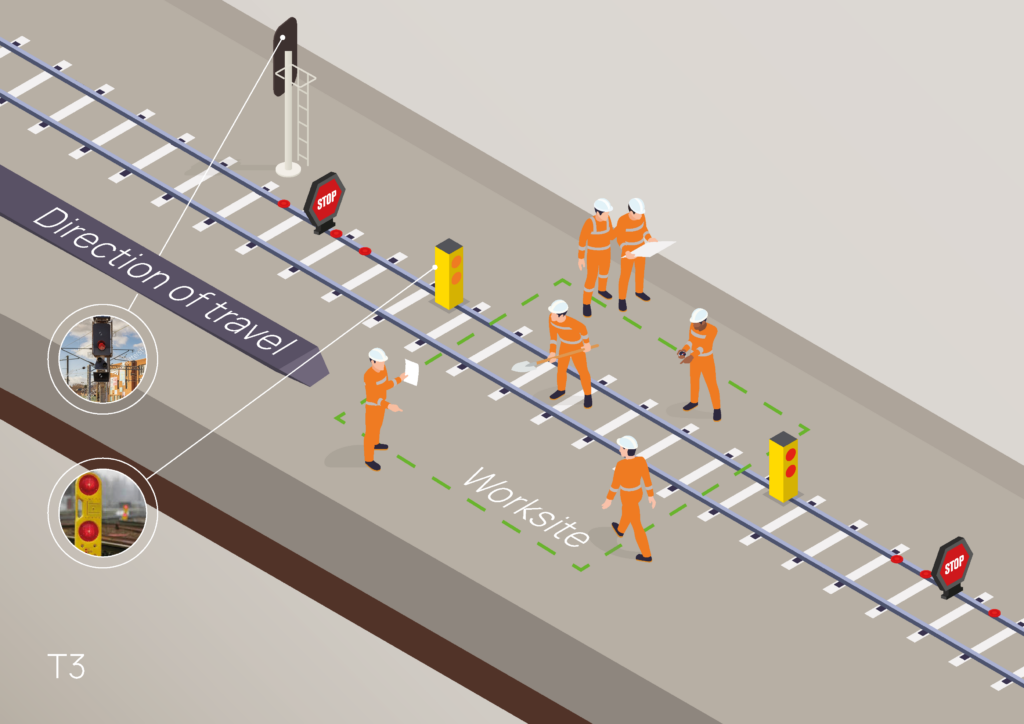
Historically, railway engineering works have been carried out within a traditional T3 possession, using possession limit boards (PLB) and detonators for protection.
This method requires track workers to walk to the extremity of the possession to place PLB’s and detonators. This imposes a risk to track workers, exposing them to unnecessary hazards, such as encroaching on or towards open lines when deploying and retrieving their protection equipment. There is also anecdotal evidence that too regularly, protection equipment is being placed on the wrong line or even outside the possession limits.
Over the years, due to better insights and reporting, concerns have grown about the safety of using PLBs and detonators and in 2015, the Rail Accident Investigation Branch (RAIB) conducted a review into the protection measures used during engineering possession works. Over a period of two years, they found a number of protection irregularities:
- 144 – protection incorrectly placed.
- 39 – protection set up whilst the line isopen to traffic.
- 52 – working outside protected area.
- 52 – trains signalling into the protected area[1].
These figures highlighted the challenges faced by teams out on track and were a cause for major concern, ultimately paving the way for a deviation to the current Rule Book. These are ‘engineering controls’, also known as T3-A and T3-D. These are new processes for the protection of T3 possessions on Network Rail managed infrastructure, that use existing technology to reduce that safety risk.
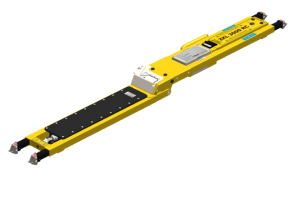
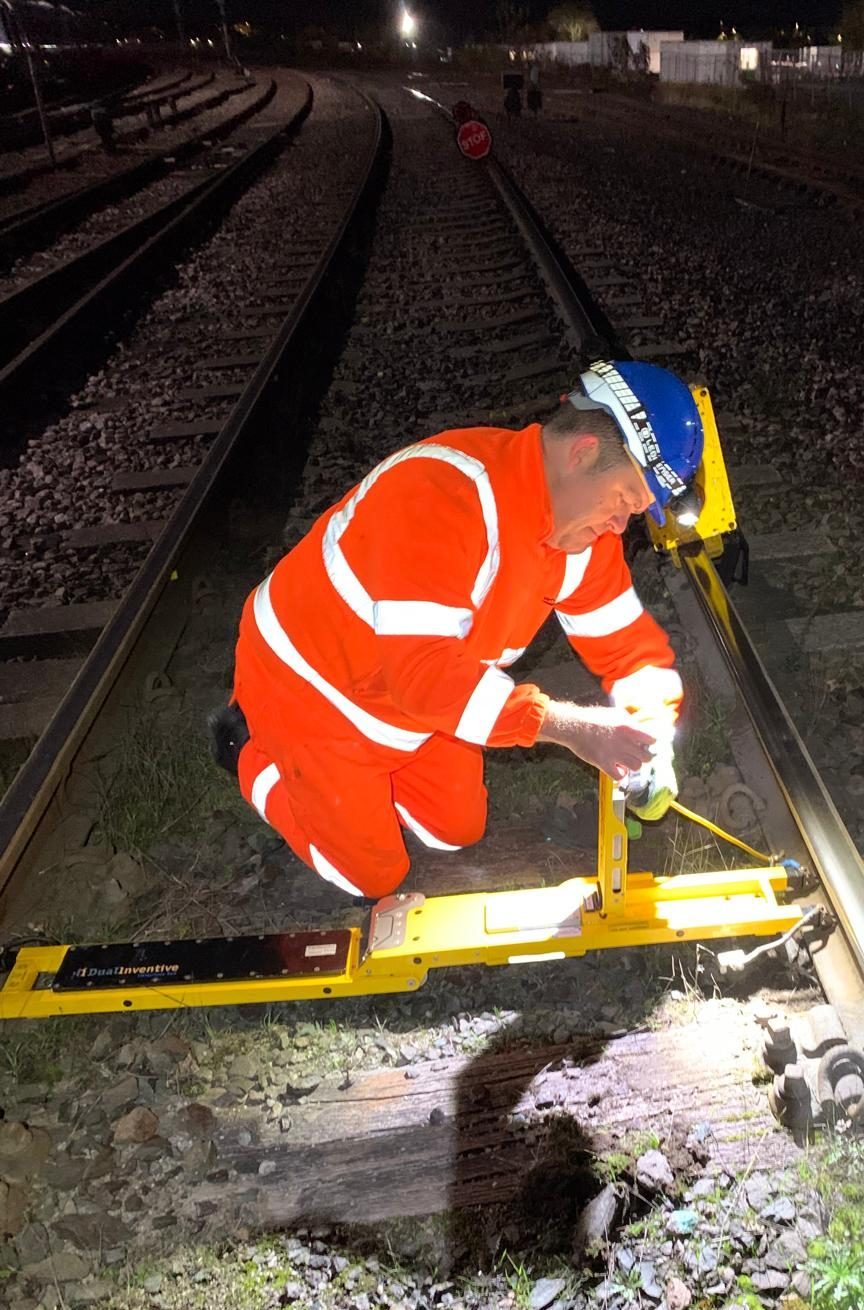
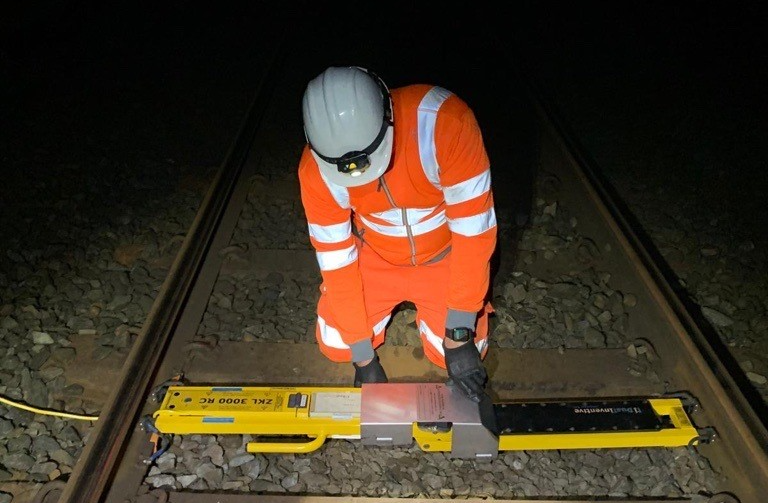
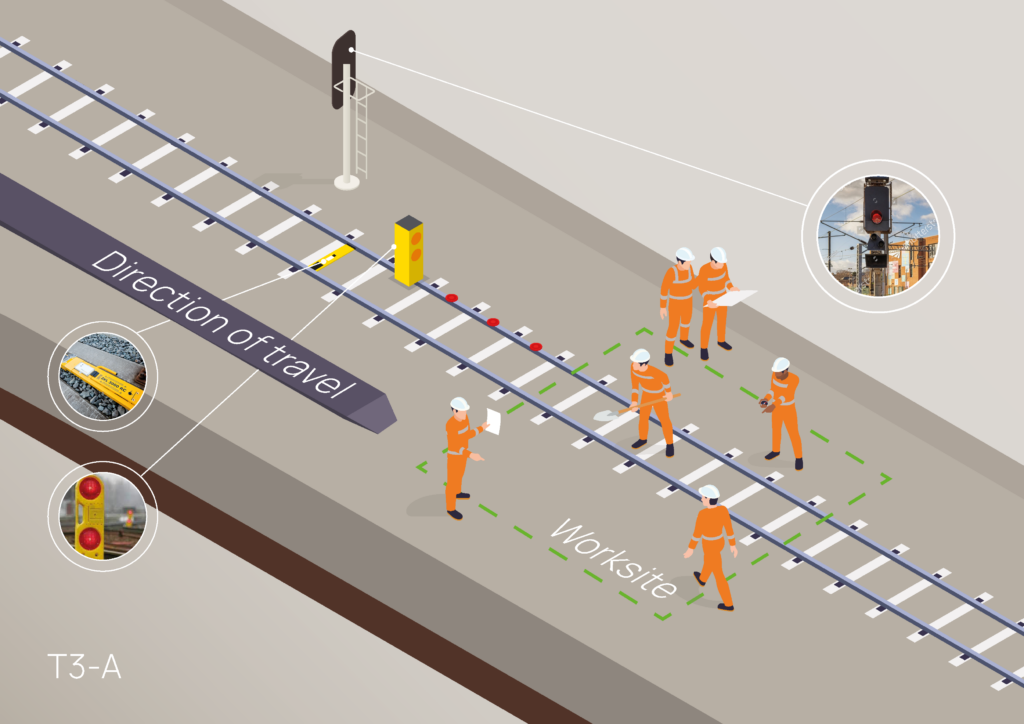
T3-A possessions that use engineering controls rely on remote disconnection devices – such as the RSS 3000 and remote-controlled T-COD devices, including the ZKL 3000 RC. These pre-installed technologies are operated remotely via mobile app or SMS, transforming how possessions are taken, protected and handed back. By reducing on-track exposure, they enable a safer, smarter and more efficient way of working.
T3-A trials involving remote-control T‑CODs, specifically the ZKL 3000 RC, were successfully conducted at Selby Junction on the North & East Route in 2024.
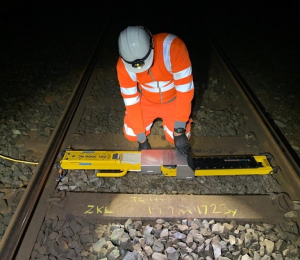
The successful completion of these trials was evidenced through:
- The output report.
- The after action‑action review.
- A series of video recordings of the possession activities.
- A wash‑up meeting to capture feedback and identify areas requiring further development[2].
The positive outcome from these trials provided TransPennine Route Upgrade (TRU) project with the opportunity to adopt the T3-A model, successfully deploying the devices on the lines between York and Leeds. Within a matter of weeks, the Project Team could see the real benefits in terms of cost and time efficiencies.
You can read more about the trial and the efficiencies gained during the TRU project here.
[1] Rail Engineer, 30th April 2025, Better Possession Protection
[2] RSSB, Deviation Certification, 3.12.2024
Problem
The article Improving Track Worker Safety, published on 28 October 2025, highlights that around 8% of possessions are currently delivered using T3-A or T3-D protection, enabling 6% more work to be completed while carrying only two thirds of the risk. It also sets out Network Rail’s ambition for regions to achieve 80% adoption of Engineering Control (T3-A and T3-D) protection by 2029.
Despite this clear strategic direction, the adoption of Possessions protected by T3-A remains uneven across the network. While some areas are adopting the approach at pace and realising its benefits, traditional T3 methods continue to be widely used where T3-A is available. This variation of roll-out limits the realisation of the safety, efficiency and productivity gains that T3-A is designed to deliver.
A traditional T3 (known as T3-H) possession in comparison to T3-A continues to have cost, increased risk to track workers, wasted time from the deployment/recovering of equipment and carbon emissions – due to the following:
- Additional cost of Possession Support Staff (PSS) to place and recover protection.
- Cost of equipment i.e. PLBs and detonators.
- Cost and time to produce multiple Safe System of Work Packs (SSWP) that require verifying and validating
- Increased risk as multiple PSS working on or near the line.
- Increased risk of deploying protection incorrectly.
- Risk of misinterpretation due to high volume of safety critical communications between Signallers, PICOPs, and PSS.
- Production time reduced through placing and recovering protection.
- Increased carbon emissions due to multiple vehicles travelling to and from possession limits.
In addition, recent findings show that modern train cabs provide a better environment for the drivers, which as a consequence have significantly improved soundproofing compared with older trains, which reduces the effectiveness of detonators as an audible warning method. We have heard this issue is particularly evident on Pendolino trains, where the driver’s cab is positioned further back. As a result, drivers may not hear or feel the effect of the detonators placed on the track and may therefore be unaware they are approaching a worksite until it is too late.
Solution
Network Rail’s introduction of T3-A possessions clearly demonstrates its recognition of the benefits of applying technology, such as the ZKL 3000 RC, where appropriate.
Recent data supports the view that T3-A provides a more efficient, safer, faster and more reliable method of protection.
Benefits include:
- The PICOP is no longer reliant on Possession Support Staff (PSS) placing and recovering protection.
- Protection can be deployed instantly through the MTinfo 3000 app, activating an unlimited number of ZKL 3000 RCs within seconds.
- Reduces safety critical communications.
- Less cancelled possessions by not relying on PSS, protection can still be deployed if PSS fail to attend shifts.
- Planning access for PSS no longer required.
- Reduced or restricted amounts of access points are no longer an issue.
- Reduces impact of walking on ballast or encroaching on third rail etc.
Efficiencies
The figures below tell a clear story – transitioning from T3 to T3-A possessions across several Kent routes has delivered measurable efficiency improvements over a fixed period.
Kent’s current T3-A possessions
Maidstone Lines (SBJ) Otford-Lenham:
| First Used: 24/02/2025 | Last Used: 07/11/2025 |
| Times Activated: | Down Maidstone FA: 21 (86 hours 52 minutes) |
| Up Maidstone NP-1: 21 (86 hours 50 minutes) | |
| Average Duration of Activations: ~4 hours 20 minutes | |
| Average time saved per possession following the transition from T3 to T3-A: 40 minutes | |
Mid Kent Lines (LCH) -Ladywell Jn-Hayes:
| First Used: 31/03/2025 | Last Used: 18/09/2025 |
| Times Activated: | Down Mid Kent- LL T/C: 1 (4 hours 1 minute) |
| Beck Spur- FM T/C: 1 (4 hours 1 minute) | |
| Down Mid Kent/Beck Spur: 5 (33 hours 55 minutes) | |
| Average Duration of Activations: ~4 hours | |
| Average time saved per possession following the transition from T3 to T3-A: 15 minutes | |
Maidstone Lines (SBJ) Maidstone East-Ashford
| First used: 09/06/2025 | Last used: 28/11/2025 |
| Times Activated: | Down Maidstone AO: 19 (37 hours 46 minutes) |
| Up Maidstone BJ: 20 (41 hours 59 minutes) | |
| Up Maidstone AGX: 21 (42 hours 4 minutes) | |
| Average Duration of Activations: ~4 hours | |
| Average time saved per possession following the transition from T3 to T3-A: 15 minutes | |
Maidstone Lines (SBJ) Maidstone East-Hothfield
| First used: 10/06/2025 | Last used: 26/11/2025 |
| Times Activated: | Down Maidstone AO: 5 (18 hours 48 minutes) |
| Up Maidstone BJ: 5 (18 hours 48 minutes) | |
| Up Maidstone MG: 5 (18 hours 47 minutes) | |
| Average Duration of Activations: ~4 hours | |
| Average time saved per possession following the transition from T3 to T3-A: 19 minutes | |
Over a period of five shifts this equates to:
Scroll table to the right
| Routes | Time Saving Per Possession | Time Savings Over 5 Shifts |
| Maidstone Lines (SBJ) Otford-Lenham | 40 mins | 3 hours 20 mins |
| Mid Kent Lines (LCH) -Ladywell Jn-Hayes | 15 mins | 1 hour 15 mins |
| Maidstone Lines (SBJ) Maidstone East-Ashford | 15 mins | 1 hour 15 mins |
| Maidstone Lines (SBJ) Maidstone East-Hothfield | 19 mins | 1 hour 35 mins |
The cost efficiencies speak for themselves – imagine the annual savings achievable through area-wide deployment of T3-A possessions.
Driving Change
Across several routes, T3-A protection is being successfully adopted for possessions, with clear benefits already being realised. This growing experience provides a strong foundation for wider transition from traditional T3 methods where T3-A is available.
As planners consider future possession strategies, the evidence demonstrating the safety, efficiency and reliability of T3-A should play a central role in decision-making. Continued exposure to successful applications is key to building familiarity and confidence.
By expanding shared learning around T3-A – showcasing practical use cases, success stories and proven best practice – we can accelerate adoption and support a consistent, business-as-usual approach to possession delivery.
Conclusion
Using Engineering Controls, such as T3-A was identified as a necessary evolution of traditional protection methods following a history of safety incidents. What began as a concept has progressed through multiple successful trials and is now recognised as the preferred method of protection across many routes.
By continuing to highlight these improvements – alongside the clear safety benefits and efficiency gains achieved – confidence can be built across the industry. This provides track workers with reassurance that T3-A represents the most effective form of protection, supporting the shared objective of everyone returning home safe every day.
Michael Doughty, Network Rail, Kent Route, commented:
We successfully installed ZKL devices while still maintaining services from the bay platform at Maidstone East. The solution has proven effective, and we’ve now implemented our third T3-A possession — saving approximately 17 minutes during both the granting and giving-up process. A great step forward in efficiency and service continuity!
For more information about T3-A using the ZKL 3000 RC, get in touch email info@dualinventive.com
Related product: